
Reviewed · PORTLAND BIKE TOURS
Bike Around Portland Oregon: Art, Culture, Bridges, Poetry
Portland on two wheels, with art and river poetry. I like how this ride stitches neighborhoods and bridges into one easy loop, not a list of monuments, and I really appreciate the bike and helmet included. The only real catch is it is still a 3-hour bike ride, so show up with weather-ready clothing.
What makes it feel especially Portland is the pace and the people. With a guide, a tight group (a cap of 15, with a listed maximum of 20), and bottled water waiting for you, you can actually look at the details, from concrete wordplay to poems on the river stones, without feeling rushed.
In This Review
- Key highlights at a glance
- Getting fitted at 833 SE Main St and easing into inner Portland
- What I’d watch for in this first stretch
- Ladd’s Addition rose gardens and the charm of a labyrinth neighborhood
- Practical note
- Clinton Street Theater greenway, old streetcar stops, and cult-movie culture
- What to keep in mind
- MAX Orange Line street art, Fin DAC murals, and wordplay on concrete
- The takeaway
- Tilikum Crossing: Portland’s most unusual bridge for cyclists
- A small consideration
- South Waterfront tram talk, the greenway by the river, and a sweet stop you can budget for
- The sweet stop: Blue Star has limited hours
- Poet’s Beach: river access with poems written by local students
- Why this stop is valuable
- Riverplace and Tom McCall Waterfront Park, where Portland changed itself
- What to look for while riding
- Under Hawthorne Bridge: learn why it moves without a ship
- Pacing, what to wear, and who this tour suits best
- Great fit for
- Who might find it less ideal
- Price and value at $47, plus what to budget for
- Book ahead if you can
- Should you book Bike Around Portland: Art, Culture, Bridges, Poetry?
- FAQ
- How long is the bike tour?
- What is the price per person?
- What is included in the tour price?
- What is not included?
- Where do we meet and where does the tour end?
- How big is the group?
- Is the tour offered in English?
- What if Blue Star is closed?
- What is the cancellation policy?
- Are service animals allowed?
Key highlights at a glance
- Small-group riding that stays relaxed enough for good photos and frequent stops
- Included bike, helmet, and bottled water, so you start the tour ready to roll
- Street art and MAX Orange Line murals, including work by Fin DAC
- Tilikum Crossing, a rare, cyclist-focused bridge with a counting device for riders
- Poet’s Beach, created by the Human Access Project with poems written by local students
- A sweet stop that can swap, since Blue Star has limited days and hours
Other Portland routes from a saddle:

Getting fitted at 833 SE Main St and easing into inner Portland
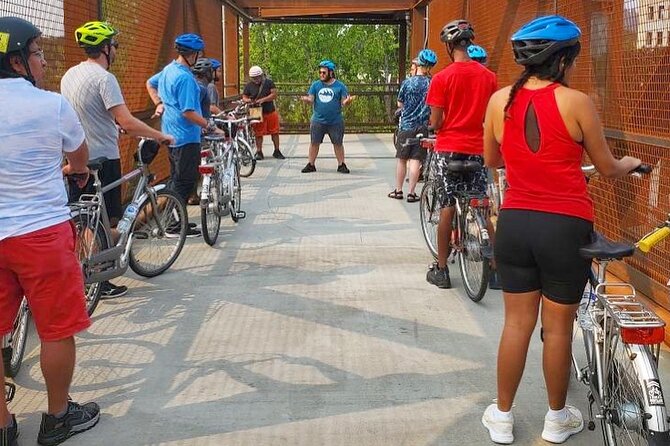
Most good city rides start the same way: you show up, you get sized up, you stop worrying. Here, you meet at 833 SE Main Street #121, get fitted for a bike and helmet, then roll out to inner Southeast Portland neighborhoods at a slow, sight-friendly pace.
On the way into the Hawthorne District, you’ll pass one of the original food cart pods and one of the newer ones. That mix matters in Portland, because the city’s identity often shows up less in big landmarks and more in how people eat, meet, and hang around outside. Your guide also uses these first minutes to set expectations for riding. If you are not a confident cyclist, this early “get comfortable” period is a big deal.
What I’d watch for in this first stretch
City riding is always about comfort. If you need a minute to adjust your seat or feel your shifting and brakes, speak up early rather than later. Also, Portland weather can change fast, so bring a layer you can add or drop without turning the ride into a production.
Ladd’s Addition rose gardens and the charm of a labyrinth neighborhood
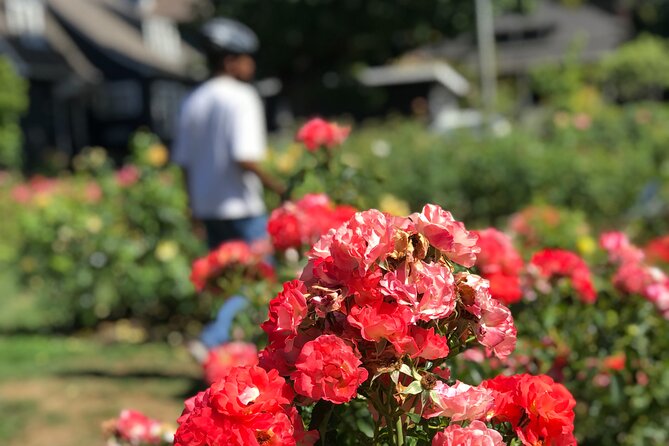
The tour’s first named stop is Ladd’s Addition, a residential area designed in a labyrinth style. It is the kind of neighborhood you see best by bike, because the streets curve and redirect you in a way that makes exploring feel like a slow walk, just faster.
You then get time at one of Ladd’s many rose gardens. This part of the ride is not just about pretty flowers. It’s a preview of how the neighborhoods here are built around community spaces and small-scale beauty, not just storefronts and transit lines. It also gives you a gentle break from motion, which helps keep the overall 3-hour flow comfortable.
Practical note
This is a garden stop with time to look around. Wear closed-toe shoes and be ready for uneven sidewalk areas, since roses usually mean pathways, not polished museum floors.
Another way to take the same day out of Portland:
- Multnomah Falls and Columbia River Gorge Half-Day Hiking Tour
★ 5.0 · 2,108 reviews - Columbia River Gorge Waterfalls Tour from Portland, OR
★ 5.0 · 1,278 reviews - Multnomah Falls and Columbia River Gorge Waterfalls Tour Morning
★ 5.0 · 913 reviews - Full-Day Guided Oregon Coast Tour from Portland
★ 5.0 · 816 reviews
Clinton Street Theater greenway, old streetcar stops, and cult-movie culture
Next up is the Clinton Street Theater greenway area. You’ll stop to see an original streetcar stop, plus, when the theater is open, a chance to check out your guide’s favorite spot for funky, artsy, cult movies.
Even if you do not care much about movie trivia, the point here is Portland’s “small venue” culture. These are the places where local art people actually spend time, not just take photos. Seeing the streetcar stop also helps you understand that the city’s transit past still shapes its present routes and neighborhoods.
What to keep in mind
This stop is short. If the theater is closed, you still get the streetcar and greenway story, just without the movie-side bonus. Either way, it’s a good momentum break, not a long detour.
MAX Orange Line street art, Fin DAC murals, and wordplay on concrete

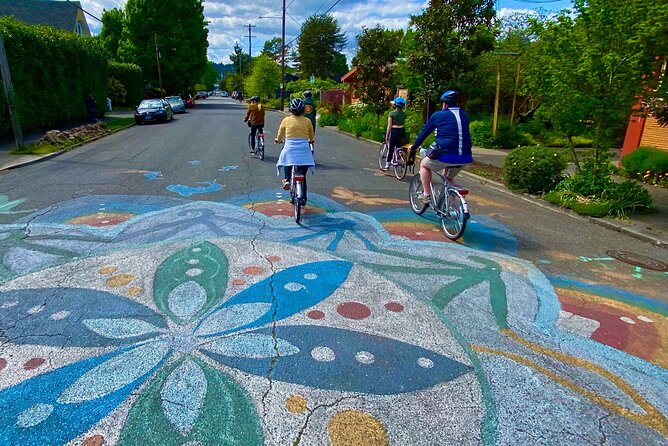
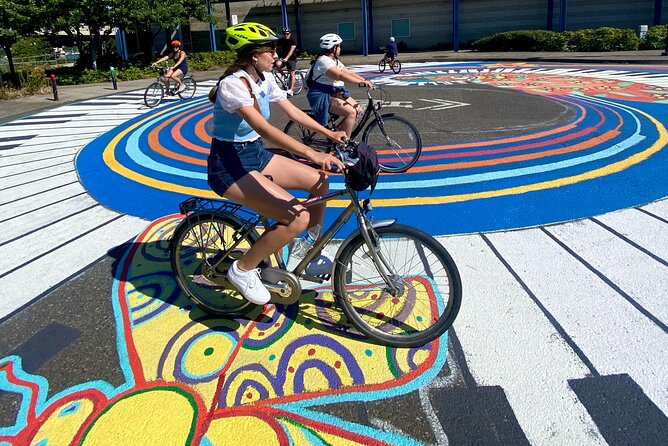
One of the best parts of this tour for people who love visual surprises is the run along the MAX light rail bike path on the Orange Line. You’re riding, but the city is also talking back. Expect art on barriers and wordplay in sidewalks, plus a standout mural by Irish street artist Fin DAC.
A mural like Fin DAC’s is the kind of piece that looks different depending on how you approach it. Bike height and speed help you catch the details you might miss standing still. And because the route is built around these art moments, the tour becomes a street art walk, just with wheels.
The takeaway
I like that the art here is not treated like a trophy. It’s treated like part of the daily city fabric. That mindset helps you leave with a better sense of how Portland makes space for creativity in ordinary places.
Tilikum Crossing: Portland’s most unusual bridge for cyclists
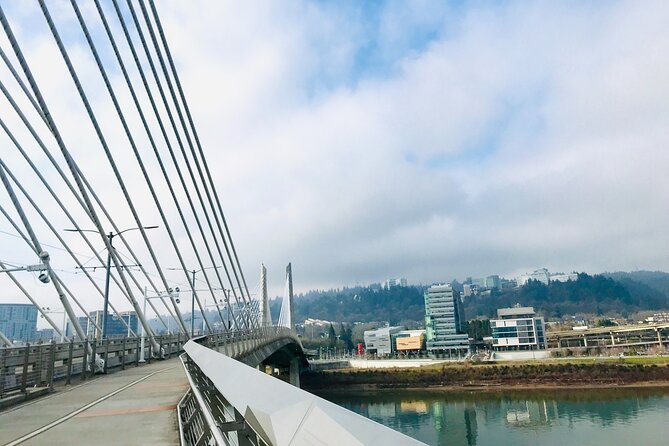
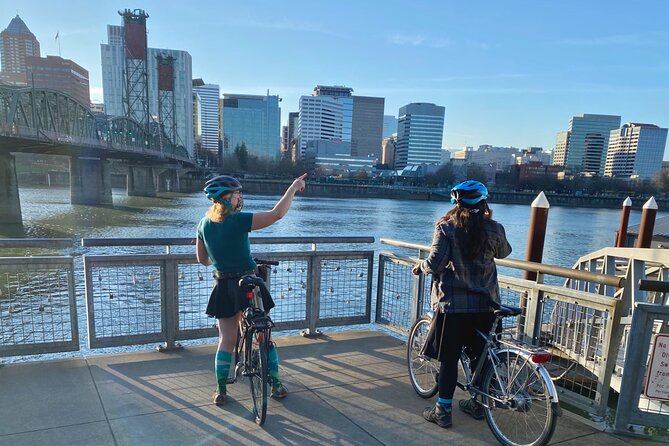
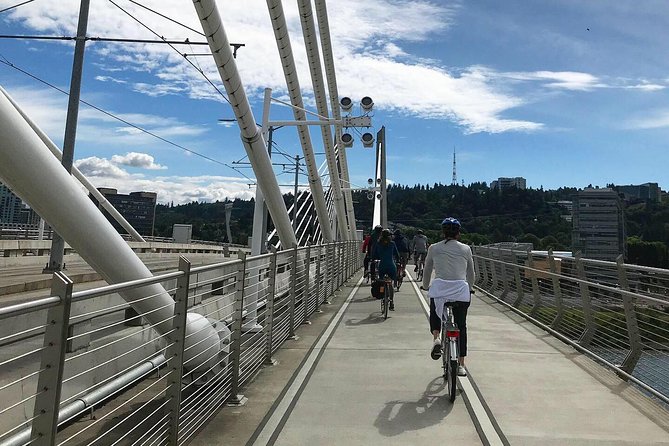
Then comes a highlight with real personality: Tilikum Crossing. It’s a distinctive bridge in a city where the Willamette River crossings do a lot of work for day-to-day travel. What makes this one special is that cyclists get a slower, more intentional experience.
As you ride onto the bridge, you’ll be counted by the device that monitors the number of cyclists crossing each day and each year. That detail sounds nerdy, but it changes how you experience the bridge. It makes you feel like you are part of a system, not just an observer passing through.
You also stop for photos and history about the bridge, including why it is unusual and what makes it the only one like it in the world. Your guide keeps the info readable and connected to what you can see around you.
A small consideration
Expect a short period where you focus on the ride more than the scenery, just because bridge sections can be busier and more open. If you are worried about steadiness, this is where your guide’s pacing really helps.
South Waterfront tram talk, the greenway by the river, and a sweet stop you can budget for
After Tilikum Crossing, you head into South Waterfront. You’ll ride past the docking for the Aerial Tram and learn why Portland’s bullet-shaped transport looks the way it does, plus how much it cost. Even if trams and tech are not your thing, the explanation lands because it ties back to Portland’s ongoing theme: improving transit while keeping it part of city life.
From there, you get a stop at the South Waterfront Greenway, one of the quieter river access spaces. This is where the ride feels more local. You’re not just looking at water, you’re riding the paths that give people daily contact with the river.
The sweet stop: Blue Star has limited hours
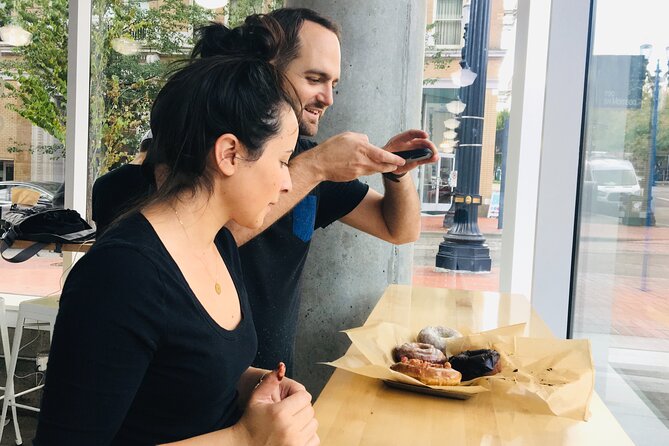
Partway through this stretch, the tour includes time at a doughnut shop pastry shop or ice cream spot. Blue Star has limited days and hours, and if it’s not open, your guide swaps to another sweet option. Plan for treats to cost extra, because snacks are not included.
This is also a good time to take care of practical needs. In real-world bike tours, stops like this are often when people use restrooms and regroup, and you’ll want to take advantage of that.
Poet’s Beach: river access with poems written by local students
If you remember one “wait, what is that?” moment, make it Poet’s Beach. This little sandy area was created by the Human Access Project, a program focused on connecting people more tangibly to the river so people care for it better.
What you might not expect is the poetry part. Along the beach, you’ll find writing created by local students. The effect is personal rather than academic. You’re not reading a plaque, you’re encountering words in a place where people come to feel the river.
Why this stop is valuable
It adds emotional texture to the ride. Art and history show up elsewhere on the route, but this is art that aims to change behavior, to make you slow down and pay attention. Even if poetry is not usually your thing, the location does the heavy lifting.
Riverplace and Tom McCall Waterfront Park, where Portland changed itself
Next, you ride by Riverplace, a housing and retail development from the 1980s. Your guide explains how it aimed to change urban design. Whether you love the project or think it aged oddly, it’s useful context for understanding why Portland looks the way it does today.
Then you move into Tom McCall Waterfront Park. This section is a lesson in how public space gets reshaped over time. You’ll learn how what the park used to be changed Portland in a big way, plus how political leadership in the early 1970s reversed course. Again, the key is that you are learning while moving through the place, not watching from a distance.
What to look for while riding
These waterfront areas are wide and open, so keep an eye on how bike paths and pedestrian space are laid out. It helps you understand why Portland feels easy on a bike in the first place.
Under Hawthorne Bridge: learn why it moves without a ship
The tour finishes by riding under the Hawthorne Bridge. You’ll learn why this iconic structure might go up and down, and the explanation includes the fact that it is not about a big ship passing underneath.
This is one of those Portland facts that makes you feel smarter in the moment. Bridges are always more interesting when you know their quirks. And because you’re finishing near the end of the ride, you also have a chance to ask follow-up questions while the guide is still fresh.
Pacing, what to wear, and who this tour suits best
The ride is designed to be slow-paced with frequent stops. From what I see in the rhythm of the stops, it’s built for sightseeing, not fitness. Reviews also mention that it’s mostly flat, with only occasional short efforts.
Still, you are on a bike for about 3 hours. If you are sensitive to weather, bring layers. A local rider tip that matches Portland reality: bring sunglasses and dress for cool or damp conditions.
Great fit for
- First-time Portland visitors who want a fast orientation across neighborhoods
- People who like street art, public art, and creative city details
- Families who want a fun group outing, as long as kids can comfortably ride city streets
- Couples or friends who want to see multiple areas without car logistics
Who might find it less ideal
If you struggle with city biking, uneven sidewalks, or staying seated for the ride segments, you may prefer a walking tour or a shorter bike option. The tour is approachable, but it is still a bike tour.
Price and value at $47, plus what to budget for
At $47 per person for about 3 hours, this is one of those Portland bargains that makes sense because key gear is included: the bicycle, the helmet, and bottled water. That removes a big chunk of friction, especially if you would otherwise rent gear and hunt for a helmet.
The other good value point is time efficiency. You see rose gardens, street art, multiple bridge experiences, river access spots, and waterfront parks without spending your whole day stitching it together with transit or rideshares.
The only obvious add-on cost is food. The sweet stop is not included, and you should plan to pay for your doughnut, pastry, or ice cream. If Blue Star is closed, you will still get that break, just at a different place.
Book ahead if you can
This tour is often booked around 16 days in advance on average, so if you have a specific date, I’d lock it in early rather than play weather roulette.
Should you book Bike Around Portland: Art, Culture, Bridges, Poetry?
I’d book it if you want a guided Portland overview that feels local, not generic. The route hits neighborhoods (like Ladd’s Addition), creative spots (MAX art and Fin DAC), big-city bike moments (Tilikum Crossing), and Portland emotional flavor (Poet’s Beach). Plus, the guide format and small-group cap make it easier to ask questions and get real recommendations.
Skip it if you cannot or do not want to ride a bike for a steady 3-hour window, or if you only want one theme, like pure museums or pure views. This tour mixes a lot of Portland in one go, and that’s exactly why it works.
FAQ
How long is the bike tour?
It runs for about 3 hours.
What is the price per person?
The price is $47.00 per person.
What is included in the tour price?
You get use of a bicycle, use of a helmet, and bottled water.
What is not included?
Snacks such as doughnuts or ice cream during the stops are not included, and gratuities are not included.
Where do we meet and where does the tour end?
You meet at 833 SE Main St, Portland, OR 97214, USA, and the tour ends back at the meeting point.
How big is the group?
The group is capped at 15 travelers for a personalized experience, and the maximum is listed as 20 travelers.
Is the tour offered in English?
Yes, it is offered in English.
What if Blue Star is closed?
Blue Star has limited days and hours. If it is closed, the guide will stop at another doughnut shop, pastry shop, or ice cream place instead.
What is the cancellation policy?
You can cancel for a full refund up to 24 hours in advance. If you cancel less than 24 hours before the start time, the amount paid is not refunded.
Are service animals allowed?
Yes, service animals are allowed.
New in the bridge city
- Visit the Oregon Coast from Willamette Valley★ 5.0 · 1 review
- Private Columbia River Gorge Half-Day Tour★ 5.0 · 1 review
- Private Portland City/Gorge Waterfalls Tour★ 1.0 · 1 review
- Private Afternoon Portland City Tour★ 5.0 · 1 review
- Private Group Tour up to 11 of Columbia River Gorge & Waterfalls from Portland★ 5.0 · 1 review
- Explore Portland Thrift Shops!★ 5.0 · 1 review
Portland Bike Tours, compared.
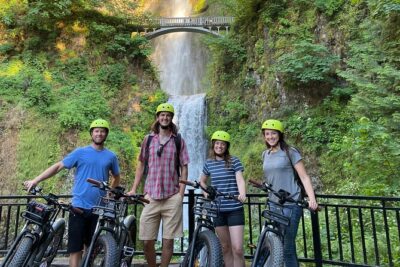
Multnomah Falls Ebiking Tour to 6 Columbia River Gorge Waterfalls
Read our review →
Hike and Bike Tour to Columbia River Gorge Waterfalls
Read our review →
Food Carts of Portland Bike Tour: local flavors and stories
Read our review →
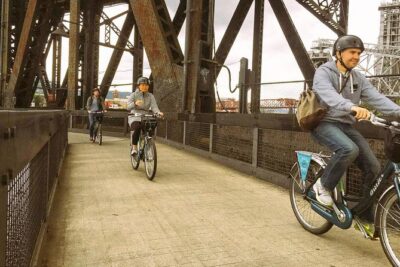
Multnomah Falls E-Bike Waterfall Tour (2+ Hours)
Read our review →
Browse the lists this tour appears in