
Reviewed · PORTLAND RIVER CRUISES
Portland’s Ultimate 12 Historic Bridges’ Scenic Boat Tour
Twelve bridges, one calm river view. This private cruise pairs Willamette River narration with up-close views of Portland’s bridge styles, from a cantilever truss to a suspension span. I really like that you get USCG-licensed captain experience plus guided commentary without bouncing around town, and I also love the mix of engineering sights and real Portland landmarks. The main drawback is simple: at $395 per group, it feels pricey unless you fill most of the six seats.
You start at Willamette Park, then glide through the river corridors where downtown lights, river wildlife, and iconic structures all show up in the same window. It’s also a BYOB setup, so you can bring what you like and keep the vibe easy. Just bundle up, because a “sunset-style” boat ride can still feel cool when you’re on open water.
In This Review
- Key highlights worth knowing
- Why a private Willamette River cruise beats bridge-hopping on foot
- Price and value: what $395 means for a group of up to six
- Getting on board at Willamette Park: what the 2-hour ride feels like
- The best first impressions: downtown skyline and Oaks Bottom Wildlife Refuge
- Ross Island Bridge and the bridge-nerd lesson you will actually remember
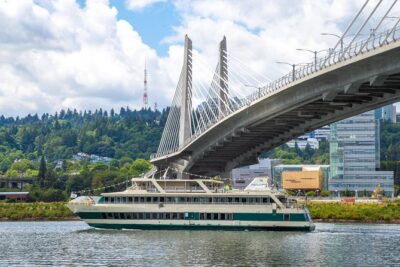
- Tilikum Crossing and Hawthorne Bridge: modern transit meets classic lifts
- Steel Bridge, the Portland sign, and the photos that feel unfair
- Oregon Maritime Museum Sternwheeler and the river’s working past
- Morrison Bridge, Fremont Bridge, and Broadway Bridge: watching different engineering styles line up
- Sellwood Bridge and St. Johns Bridge, plus the parks you can see under them
- Burnside Bridge, Saturday Market viewpoints, and other “look at that” moments
- Elk Rock, Poets Beach, and South Waterfront: nature, art, and redevelopment from one angle
- When “history” is more than a word: iron, ferries, and the people stories
- Should you book the Portland 12 Historic Bridges boat tour?
- FAQ
- How long is the Portland 12 Historic Bridges scenic boat tour?
- What is the price and how many people can be in a group?
- Is the tour private?
- Where does the tour start and end?
- What language is the tour offered in?
- What is included on the boat?
- Can I bring food or drinks?
- Are there cancellation options?
Key highlights worth knowing
- Private, up-to-6 group format so you do not share your boat with strangers
- Bridge spotting from the water with clear narration on what makes each design rare or important
- Morrison Bridge at night with colors that change daily (perfect if you catch dusk)
- Oaks Bottom Wildlife Refuge with bird-focused nature time from the river
- Photo-rich landmarks like the Portland sign, the Oregon Maritime Museum Sternwheeler, and riverfront districts
- Captains bring personality and comfort, including heated seat blankets noted in past trips with Captain Nate
More time out on the Willamette:

Why a private Willamette River cruise beats bridge-hopping on foot
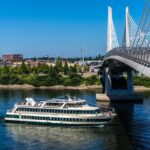
Portland’s bridges are easier to understand from the river than from a sidewalk. From water level, you can see how each bridge’s structure works, not just its overall silhouette. And you get the payoff of staying seated while the city slides by.
This tour is also built for “different interests, same trip.” If your group loves architecture, you get real details on cantilevers, tied arches, bascules, lifts, trusses, and suspension spans. If you just want an easy way to see Portland, you still get payoff after payoff: skyline views, riverfront parks, museums, and neighborhood changes you can actually point to.
One practical bonus: the experience includes views with no stop-and-stroll landings, so you are not losing time with getting off and back on again. In two hours, that matters.
Price and value: what $395 means for a group of up to six
The headline price is $395 per group, and the limit is six people total. That is not “cheap,” but it can be fair if you spread it across family members or a small friend group.
Here’s the math you can use:
- If you book with 6 people, you are effectively paying about $66 per person.
- If you have only 2 people, it jumps to about $198 per person.
What makes it feel more worthwhile is what is included with that group price: life jackets, narration by an Oregon-registered guide, and an insured private cruise with a USCG-licensed captain. You also get photography opportunities, plus the simple comfort of being on your own boat, not squeezed into a larger crowd.
Getting on board at Willamette Park: what the 2-hour ride feels like
The tour meets at Willamette Park, 6500 S Macadam Ave, Portland, OR 97219, and ends back at the same spot. You get a mobile ticket, the tour is offered in English, and it is confirmed at booking.
Duration is about 2 hours. That short window shapes your experience in a good way. You will not have to plan your day around long travel blocks. You also get enough time to catch both “daytime structure” and, if timing lines up, “night illumination” moments.
A few comfort notes that you should treat as real-world planning:
- Bring layers. Even if it is warm on land, water breeze can cool things down.
- Bring a sense of flexibility. One past birthday outing described a late run on a busy holiday weekend, and the captain kept things more factual than chatty. That is not a guarantee, but it is a good reminder that schedules can shift when the river is busy and multiple cruises run in a day.
The best first impressions: downtown skyline and Oaks Bottom Wildlife Refuge
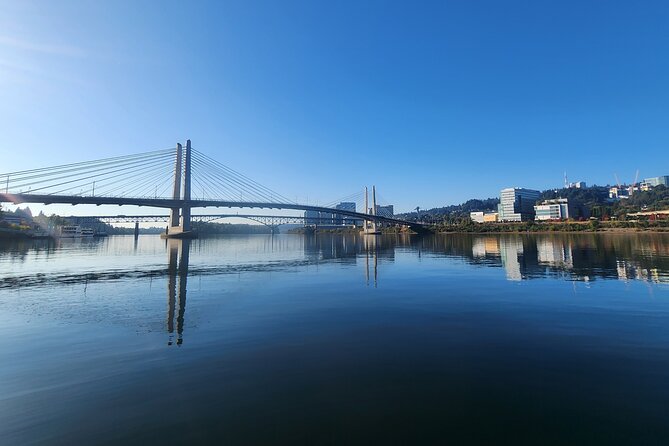
Early on, the cruise focuses on the downtown Portland skyline from the Willamette River. This is where you get the “oh, this is why we do a river tour” feeling: bridges line up like a changing skyline, and you see the city’s layout without traffic stress.
Then you get a calmer pivot toward nature with Oaks Bottom Wildlife Refuge, a 141-acre city refuge in southeast Portland near Sellwood. This place is especially appealing if you like birds or quiet green space, because it is Portland’s first wildlife refuge (established 1988) and later became the city’s first migratory bird park (designated 2004).
From the water, the refuge reads as a soft break from the urban edges. You are not hiking through it, but you can still enjoy what it does well: wetland, meadow, and woodland habitat right next to the river corridor. It is an easy way to see a different side of Portland without changing your schedule.
A few other bridge-city days to weigh
- Macabre Ghost History of Portland, Oregon walking tour
★ 4.5 · 11 reviews - Portland Food and Fun History Adventure
★ 3.0 · 2 reviews
Ross Island Bridge and the bridge-nerd lesson you will actually remember
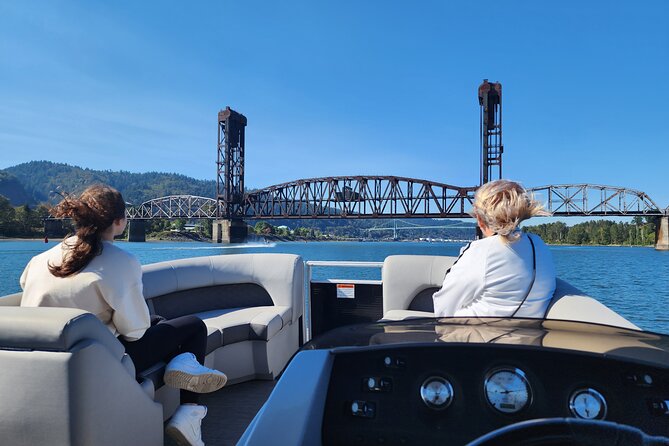
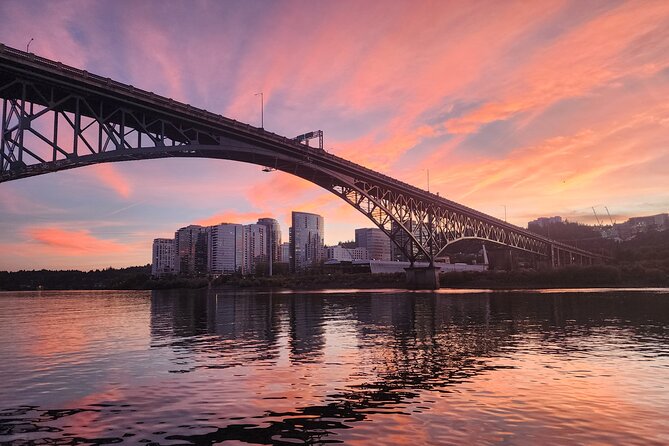
Portland has many bridge types, but the narration helps you sort them quickly. A standout in the lineup is the Ross Island Bridge, a cantilever truss bridge opened in 1926. The design detail matters: it carries U.S. Route 26 and is a rare bridge type in Oregon.
The tour also explains the naming piece. It honors Oregon pioneer Sherry Ross, and it is named for its proximity to Ross Island. If you are the type who likes “small facts that stick,” this kind of story is exactly what makes a boat tour better than a photo stop.
What I like about seeing Ross Island Bridge this way is the perspective. Cantilever designs can look confusing on land. From the river, you can line up the structural span with the water and actually make sense of the shape.
Tilikum Crossing and Hawthorne Bridge: modern transit meets classic lifts
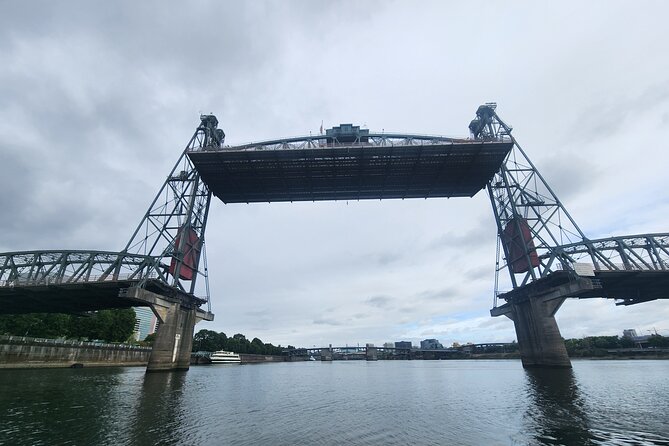
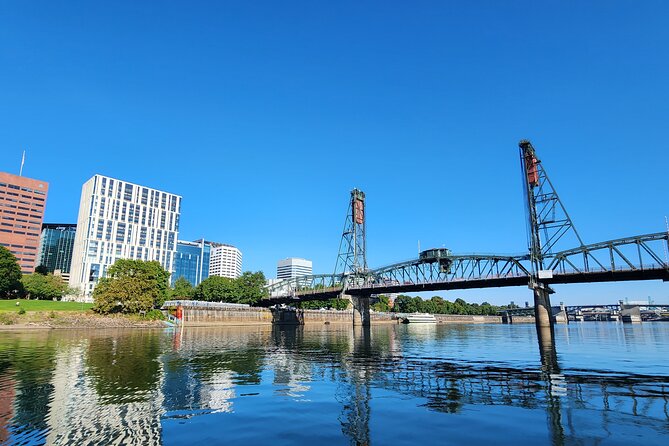
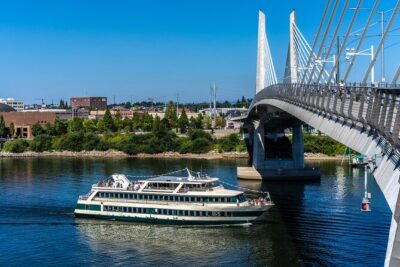
Next comes Tilikum Crossing, also called the Bridge of the People. It spans 1,720 feet across the Willamette River and was designed primarily for the MAX Orange Line light rail. The bridge also carries pedestrians and bicyclists in a separate paralleling lane, plus TriMet buses and the Portland Streetcar.
The big “why this matters” detail is access. When it opened in 2015, it became the longest U.S. bridge used for both public transportation and pedestrians, while still not serving private motorized vehicles. That policy makes it feel different from most city bridges, and it shows up in how you experience the crossing from the river.
Then you get the Hawthorne Bridge, a truss bridge with a vertical lift. This one is famous for being the oldest vertical-lift bridge still in operation in the United States, and the oldest highway bridge in Portland. You will get that sense of “this is how the city moved before modern crossings took over” without needing a museum ticket.
Steel Bridge, the Portland sign, and the photos that feel unfair
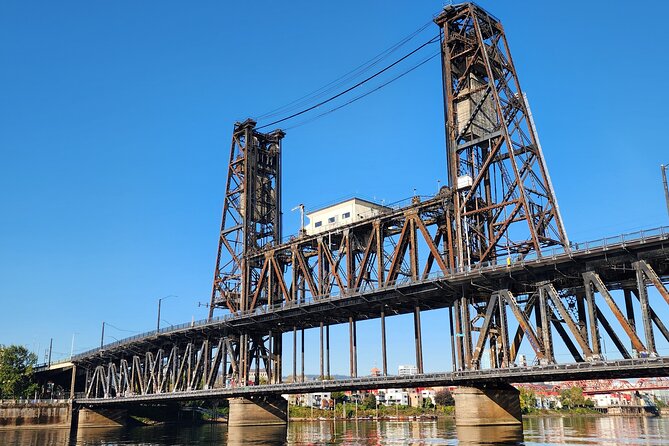
One of the most photogenic moments is the Steel Bridge, a through truss with double-deck vertical lift design. It opened in 1912, and the tour points out how flexible it is: the lower deck handles railroad and bicycle/pedestrian traffic, while the upper deck carries road traffic and light rail (MAX). It even notes the former Oregon Route 99W alignment.
If you like systems thinking, this is the bridge that quietly teaches it. Portland built it for multiple modes, and you can see that planning reflected in the stacked decks.
Right around the same corridor, you also get a memorable view of the Portland Oregon sign atop the historic White Stag Building near Burnside Bridge. From the river, it becomes a focal point against downtown, and the tour description specifically highlights the glow and reflections on the water during twilight and nighttime cruising. If you are bringing a camera, this is one of the spots where the shot can look good fast, even without perfect settings.
Oregon Maritime Museum Sternwheeler and the river’s working past
Portland’s river is not just pretty. It is industrial, then cultural, then industrial again in different ways. The Oregon Maritime Museum Sternwheeler helps you connect that.
As you pass, you see the historic vessel docked on the riverbank, listed on the National Register of Historic Places. The narration ties it to the golden age of river transport when steam-powered boats mattered for trade and travel. Even if you never step inside, passing it from the river gives the moment weight, because the boat is physically part of the waterfront story.
The cruise also keeps returning to riverfront sites tied to Portland’s transformation. For example, you might see references to Old Town and the idea of hidden infrastructure like the Shanghai Tunnels under the cobblestone streets, explained as part of Portland’s darker past. The point here is not to sensationalize it. It is to connect city myths to a real map view, and you get that “wait, that is right there” feeling from the water.
Morrison Bridge, Fremont Bridge, and Broadway Bridge: watching different engineering styles line up
The cruise includes the Morrison Bridge, a bascule bridge completed in 1958 and the third bridge at about the same site with that name. One of the most practical details is timing: the tour description calls out that Morrison Bridge lights up at night with colors that change daily. If your ride ends around dusk, this can become your “best light” bridge moment.
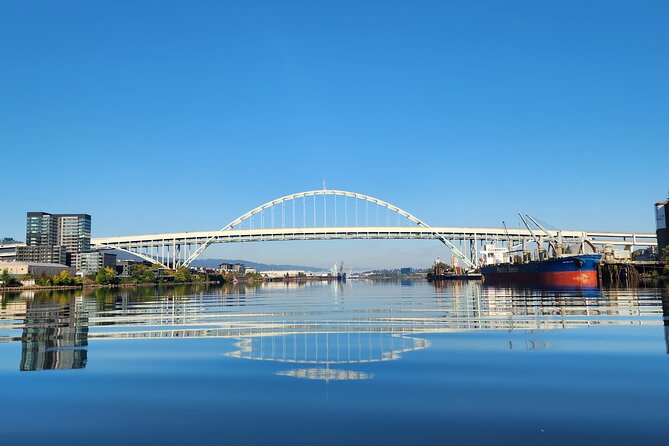
Then comes the Fremont Bridge, a steel tied-arch bridge carrying I-405 and US 30 traffic between downtown and North Portland (near the I-5 interchange). It has the longest main span of any bridge in Oregon and is noted as the second longest tied-arch bridge in the world. From the river, those long-span proportions feel less abstract. You can follow the curve line by line.
Finally, you get the Broadway Bridge, a Rall-type bascule bridge built in 1913. The tour calls it Portland’s first bascule bridge and notes it has the longest span of its bascule design type in the world. Again, you get the “design language” lesson: truss, lift, arch, bascule, suspension. Portland is basically a living bridge textbook.
Sellwood Bridge and St. Johns Bridge, plus the parks you can see under them
The cruise includes the Sellwood Bridge, a deck arch bridge across the Willamette River. The current bridge opened in 2016, replacing a 1925 span that carried the same name. The tour description also notes that the original Sellwood Bridge was Portland’s first fixed-span bridge and, because it was the only river crossing for miles in each direction, it was the busiest two-lane bridge in Oregon.
From the water, you get both the structure and the neighborhood context. That matters because Portland’s bridge stories are never isolated. They lead you right to how people lived and moved.
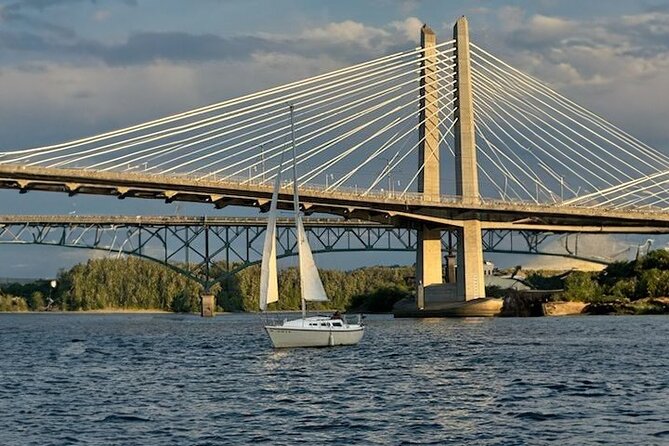
On the north side, you get the St. Johns Bridge, a steel suspension bridge carrying U.S. Route 30 Bypass between the Cathedral Park area in North Portland and northwest industrial neighborhoods. The tour description emphasizes that it is the only suspension bridge in the Willamette Valley and one of three public highway suspension bridges in Oregon.
Just under St. Johns Bridge is Cathedral Park, named for the bridge’s Gothic arches. The tour narration includes the history: the area was tied to St. Johns before it became part of Portland, and it also references the tragic 1949 murder of Thelma Taylor. It then shifts to the brighter civic effort story, including how residents raised $7.5 million in the 1970s to transform the area from a neglected dumping ground into a community park, opened in 1980 with art installations like Donald Fels’s Drawing on the River.
Burnside Bridge, Saturday Market viewpoints, and other “look at that” moments
Not every bridge has a long explanation point-by-point, but you still get the Portland icons. The cruise includes views of Burnside Bridge from the water, and it uses that river position to frame other landmarks.
One fun river-side “Portland on a Saturday” connection is Tom McCall Waterfront Park and the Portland Saturday Market. The tour description calls it the largest continuously operated outdoor market in the United States. It runs every weekend from March to December, with over 400 local artisans, about $12 million in annual sales, and around 750,000 visitors per year. From the boat, it is easier to imagine the place when you are not trying to walk through it.
This is also where the cruise’s pace helps you. Instead of forcing long museum time or long walking loops, you get quick, narrated windows. You leave with mental snapshots that you can turn into a longer plan later.
Elk Rock, Poets Beach, and South Waterfront: nature, art, and redevelopment from one angle
A big part of Portland’s charm is that it changes mood constantly. This cruise does the same.
You might see Elk Rock and Elk Rock Island, described as volcanic in origin. The tour frames it as a geological throwback that creates a sharp contrast with the river water, and it is one of those “it looks dramatic, but it is close” viewpoints that feels calming rather than busy.
Then there is Portland Poets Beach, described as a riverside spot created through the Human Access Project (HAP). The tour mentions it started in 2000 with limited access and signage, then HAP volunteers improved access in 2014 by cutting through basalt rock and adding art, including 30 children’s poetry excerpts and Chinook Jargon engravings. In 2017, Mayor Ted Wheeler even swam there when it launched as the city’s first pop-up beach with lifeguards. Even if the lifeguards are not operating now, the spot remains part of the city’s river creativity story.
Finally, you cruise past South Waterfront, one of the largest urban redevelopment projects in the U.S. The tour description notes it rose from former industrial brownfields and is connected to downtown by the Portland Streetcar and MAX Orange Line, with South Waterfront/SW Moody Station as a transit hub. It also points out the Portland Aerial Tram linking the area to OHSU on Marquam Hill, which means you get a strong “modern Portland” view from the river.
When “history” is more than a word: iron, ferries, and the people stories
The river tour description also ties in the older working Portland pieces. One example is the Oregon Iron Company site, described as the first iron smelting company west of the Rocky Mountains, established in 1865. The narration includes that it struggled early, was reborn twice, peaked around 1890, and ceased smelting by 1894 due to economic pressures. It then connects that legacy to how the region developed, including Lake Oswego.
You also get the sense of older transit patterns with the Sellwood Ferry Landing, described as a reminder of how ferries connected Portland neighborhoods before modern bridges took over.
If you care about how cities evolve, these moments are useful. They help you read Portland as a sequence of choices, not just a set of neat buildings.
Should you book the Portland 12 Historic Bridges boat tour?
I think you should book this cruise if you want Portland in one smooth, guided pass, and your group includes at least one person who likes structures, river views, or learning while you sit down.
Book it with confidence if:
- You can fill most of the six-seat private group, so the per-person cost makes sense
- You like guided narration and easy photography from stable boat viewing positions
- You want a mix of bridge engineering and real Portland landmarks like the Portland sign, the maritime museum vessel, and major neighborhoods
Skip it if:
- You want a low-cost option for just one or two people, because $395 per group is the key price factor
- You expect nonstop jokes or constant conversation. One past trip highlighted a more factual, less interactive style on a long holiday weekend, so you should treat the experience as narration-first, not stand-up comedy.
If you match those fit points, you will end the ride with a brain full of bridge shapes, and a camera full of river angles you cannot get from land.
FAQ
How long is the Portland 12 Historic Bridges scenic boat tour?
The tour is about 2 hours.
What is the price and how many people can be in a group?
It is $395 per group for up to 6 people total (including children and adults).
Is the tour private?
Yes. It is a private tour, so only your group participates.
Where does the tour start and end?
It starts at Willamette Park, 6500 S Macadam Ave, Portland, OR 97219, and ends back at the same meeting point.
What language is the tour offered in?
The tour is offered in English.
What is included on the boat?
Included items are a 2-hour private boat on the Willamette River with a USCG licensed captain, life jackets, narration by an Oregon registered tour guide, insurance for visitors, all fees and taxes, and photography opportunities.
Can I bring food or drinks?
Yes. Snacks are not included, and all cruises are BYOB (bring your own). Food and drinks and alcohol are allowed.
Are there cancellation options?
Yes. You can cancel up to 24 hours in advance for a full refund. Confirmation is received at booking.
New in the bridge city
- Visit the Oregon Coast from Willamette Valley★ 5.0 · 1 review
- Private Portland City/Gorge Waterfalls Tour★ 1.0 · 1 review
- Private Columbia River Gorge Half-Day Tour★ 5.0 · 1 review
- Private Afternoon Portland City Tour★ 5.0 · 1 review
- Private Group Tour up to 11 of Columbia River Gorge & Waterfalls from Portland★ 5.0 · 1 review
- Explore Portland Thrift Shops!★ 5.0 · 1 review
Portland River Cruises, compared.
Scenic 2-Hour River Cruise to the Majestic Willamette Falls!
Read our review →Browse the lists this tour appears in